Home            About Us            Newsletters            Support Us            Links            Contact Us

Tuesday, November 01, 2011

Swimming Lessons

Now and then we get new crew members come that want to use their different skills to bless the crew on board.  Recently Emma, who is working in the galley, offered the pre-schoolers swimming lessons.  Back in the USA Emma is a certified swim instructor so of course we jumped at the chance for Nathanael to get some more swimming time in. Over a 2 week period the kids have been meeting for 6 half an hour sessions and they seemed to have had fun.
Unfortunately our new pool can get a bit wavy when the ship is rocking slightly and the first two lessons were spent focusing on when the next big wave was coming. 
This is the result when it comes!
At one point she had all the kids clinging on to her getting ready to ride the next wave!
But in the calmer moments they were able to practice their ice cream scoop
Although Nathanael focused a little too much on trying to eat ice cream than stretching his arms to motion swimming 
A calm moment to practice airplane rides whilst kicking their feet. 
Thank you so much for doing this Emma!

Friday, October 21, 2011

Preparing for Christmas

Some of you who read this may groan at the idea of even thinking of planning for Christmas in the middle of October and it's just over the top, especially those who still have Thanksgiving to think of before that!  Where as here in Africa, we start to panic as October approaches.  We panic in case we didn't get that last gift for Nathanael on the last container that left Holland or the USA in September, or we're hastingly buying very "light" items to be sent in the mail and counting the cost of 55 cents an ounce for postal charges.  Spending Christmas in Ghana has made us even more creative.  For us, Christmas preparations almost start at the beginning of the year.  So now we are here, October has arrived and the top of the cupboard is full awaiting it's gift wrap. 

But amidst all the planning there is still one thing that is our focus and that is the celebration of the birth of our saviour.  This year we came across the idea of the Jesse Tree.  For some this might already be a tradition in their household but it was something we had never heard of before. 

The Jesse Tree idea is taken from the scripture reading Isaiah 11:1:

"A shoot will spring forth from the stump of Jesse, and a branch out of his roots." 

It tells the story of God from the Old Testament to the advent season and the faithfulness of God across 4,000 years of history. The Branch is a biblical sign of newness out of discouragement, which became a way to talk about the expected messiah (for example, Jer 23:5). It is therefore an appropriate symbol of Jesus the Christ, who is the revelation of the grace and faithfulness of God.

We were able to get hold of a book which will take us through that journey through the month of December with daily bible readings and devotions and also gives decoration ideas.  So Nathanael and Sharon are now in the throws of making decorations to go along with it.  There are many ideas that can be accessed online (see some links at the bottom of this post), whether it's templates, readings etc.  Some churches even do an "ornament exchange" where 25 people make 1 of the decorations 25 times and then meet together to swap and get a complete 25 day set.

These are our first ornaments in the making which include the sun to represent creation & light, Adam & Eve - sin, rainbow - Noah and the ark, coloured coat - Joseph, sheaf of wheat - Ruth &Boaz, Ladder - Jacob. 
There are still more being cut out and needing to be stuck together, but we'll share the rest with you when we're finished.

If you're interested in maybe doing a Jesse Tree yourself, here are some links to get you going and please let us know how you get on:

Tuesday, October 11, 2011

Back to Childhood

On May 31, 1997, the Danish ferry Dronning Ingrid stopped running. A tunnel from the cities of Koersoer to Sproege made ferries obsolete. That was a very sad day for 11-year old Milan Falsing. “I cried for two or three days,” he said.  Born and raised in the small town of Hoeng, Milan had traveled with his family by the ferry many times to visit family members in other parts of Denmark and especially to the small island of Aeroe, where his grandmother lived.
“It was always a special occasion for me and my sister,” he recalled.  “On the starboard side forward (where the dining room is now) there was a play area for children.”  Milan had so many happy memories of good times onboard the ferry, and he was broken- hearted to think there would be no more. His concerned mother contacted Scandlines, who owned the ferry at the time, and asked if Milan and his siblings could visit the ferry one last time to say farewell. The vice president granted the request. “When my mother gave me the good news, I was all jumpy and screamy and so happy,” he said.

Finally, the big day arrived – a day off from school – and he was very excited. The first thing he noticed when they arrived was that everything was being dismantled, and there were no lights – all was dark. The vice president of Scandlines showed them around, and Milan and his siblings enjoyed one last time in the play area. There were small ashtrays around, and Milan kept one as a souvenir. “Up on the bridge, I remember the huge glass plates in the floor. It was fun to stand on them and look down.” He was in the fourth grade at the time, and he was the last passenger onboard. “That’s when I decided to be a seafarer,” he said. “I just wanted to go out to sea.”

In the ninth grade, he began to prepare for his life at sea by choosing to go to a boarding school with a maritime focus. From there he went to the maritime high school, where he could get a high school diploma and a seaman’s degree that would allow him to find a position on a ship. He went to work for the Maersk Line for his basic training at sea. They also had an educational opportunity for a duel degree, but he wanted to become a single navigator and chose the Marstal Maritime Academy, located on his grandmother’s island. “I have a big association with that island,” he said.

As a member of the Danish Ferry Institute, Milan kept his interest in the Dronning Ingrid alive. When Mercy Ships bought the ferry in 1999, it was moved to Newcastle, United Kingdom, to be renovated to become the hospital ship, the Africa Mercy. “I had never heard of Mercy Ships before and wondered what Mercy Ships was. What would a religious group want with a ferry? We didn’t know what God was doing with the Dronning Ingrid.” Milan’s interest was piqued as he followed the progress of the renovation.

After seven years, he saw the ferry again. Totally renovated, she had become the Africa Mercy, a state-of-the-art hospital ship. “There she was! A new ship, all white with a new stack.”

As soon as he received his Master’s Unlimited Degree, he started looking for an opportunity to serve onboard. His commercial job allows for lots of vacation time, but often it doesn’t coincide with an opening on the ship. When he realized his vacation finally coincided with an opening on the bridge this year, he applied right away.
His application was accepted on a Monday, and everything was in order. But he needed his numbers for blood pressure and pulse. At midnight, he biked down to the emergency medical doctor, a short distance away, and explained what he needed and why. “It only took five minutes to get the numbers,” said Milan. He called them in on Tuesday, and Thursday morning he left for Freetown – and became the first Danish officer to serve onboard since 2009. He confided that his mother and sister were elated that he was going to be on the ship and asked if there was room for them, too.
Milan (his crew mates call him “Milo”) is very excited and happy to be serving onboard. “I don’t want to go home, but I have to,” he admitted. “I also would love to come back again.”  He wants to promote Mercy Ships as much as he can when he goes home. “This is unique! You can’t find it anywhere in the world!” he exclaimed.

Tuesday, October 04, 2011

Keep Those Mossie's Away

In West Africa, over 3,000 children die of malaria every day; 1 out of every 5 childhood deaths is due to malaria. Malaria kills a child every 30 seconds in West Africa and the disease can cause anemia and jaundice and, if not promptly treated, can cause coma, kidney failure, or death.  To make matters worse, the West African rainy season that begins in June will cause flooding that will aggravate the problem, since standing water is a breeding ground for mosquitoes that carry the disease – according to Robert Agyarko, UN Children’s Fund Specialist on Malaria for West Africa. In Freetown, Sierra Leone, it is estimated that between 60% and 70% of mosquitoes are malaria carriers.

The Center for Disease Control and Prevention reports that malaria can be controlled, and even prevented, using anti-malarial drugs, insect repellent, or mosquito nets in sleeping areas. UN Special Envoy for Malaria, Ray Chambers, reports, “Mosquito nets are still the most effective tool for preventing malaria in West Africa.”  Mosquito nets are infused with Permethrin, a long-lasting insecticide that acts as a barrier to prevent mosquitoes from penetrating the nets. It drives away the mosquitoes and kills the ones that land. Unfortunately, only 40% of households in Sierra Leone have an insecticide-treated mosquito net (ITN).  St. Mary’s Church in Olveston, Bristol, United Kingdom, is taking a stand against this deadly killer. They have donated £5,000 to Mercy Ships for the distribution of mosquito nets at the HOPE Center in Freetown.
This land-based facility houses patients who are awaiting surgery and those recovering from surgery onboard the hospital ship, the Africa Mercy.
When the patients are discharged from the HOPE Center, they will each be given a mosquito net and told how to use it properly. They will also receive additional information on how to prevent malaria. This promising strategy will make a difference in fighting this deadly disease.

Stat's taken from WHO 2003 Africa Malaria Report & WHO 2010 Africa Malaria Report

Wednesday, September 21, 2011

New Donors Page

With longer Field Services in Africa it is becoming more & more difficult for crew to get home to fundraise. So Mercy Ships has been trying to find different ways to help crew members raise their support base.  One of their new developments is to set up fundraising webpages for all crew.  So here's ours.  If you already donate on line you can continue to do so on the old webpage for a short time, but it would be good to change over to the new page.  You can click on the picture to take you to it, or if you ever need it in the future you can also find it on our blog under the tab "Support Us" 
Thank you for partnering with us, we couldn't do it without God using you!

Friday, September 16, 2011

At the Beach

The other weekend we had the opportunity to go to the beach. Nathanael misses out on many things so we try and give him a fun day out now and then. It was about an hour to Bureh beach and as with all trips out, other Mercy Shippers had also decided on doing the same trip as us and before long another few landrovers turned up which delighted Nathanael as one of his friends from pre-school joined him. They had fun together building sandcastles and playing in the water.
A small lagoon at the end of the beach

Many support English football teams here, I took this photo for my Dad!
You need to keep you food under cover, away from these vultures!
Food is ordered 3 hours in advance so they can catch it if they have to and cook it. This is our food coming from the village.
It was very yummy, fresh tuna fish, rice and onion tomato sauce, topped off with freshly squeezed lime
.
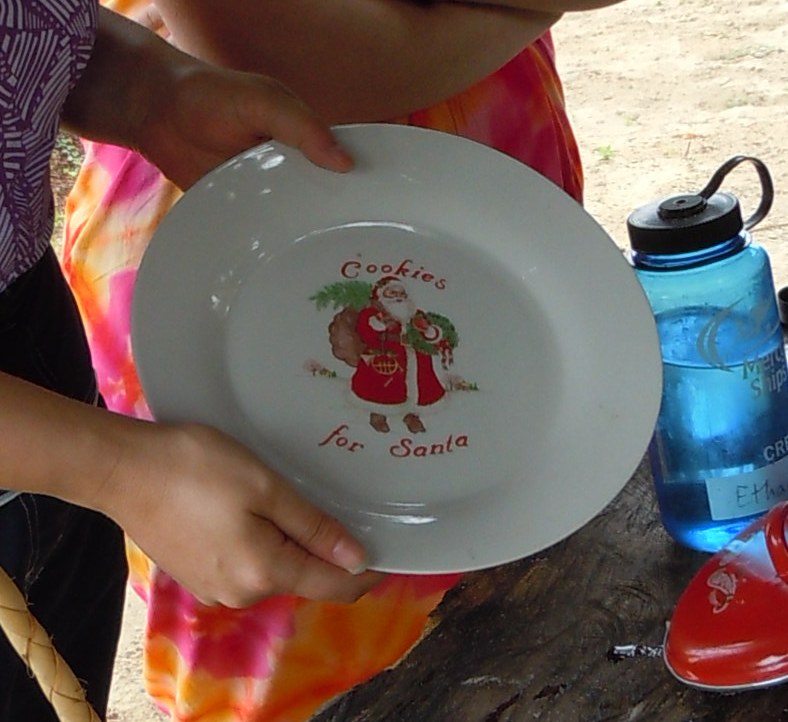
We even got to eat off a plate with "cookies for Santa", just love the things that pop in Sierra Leone
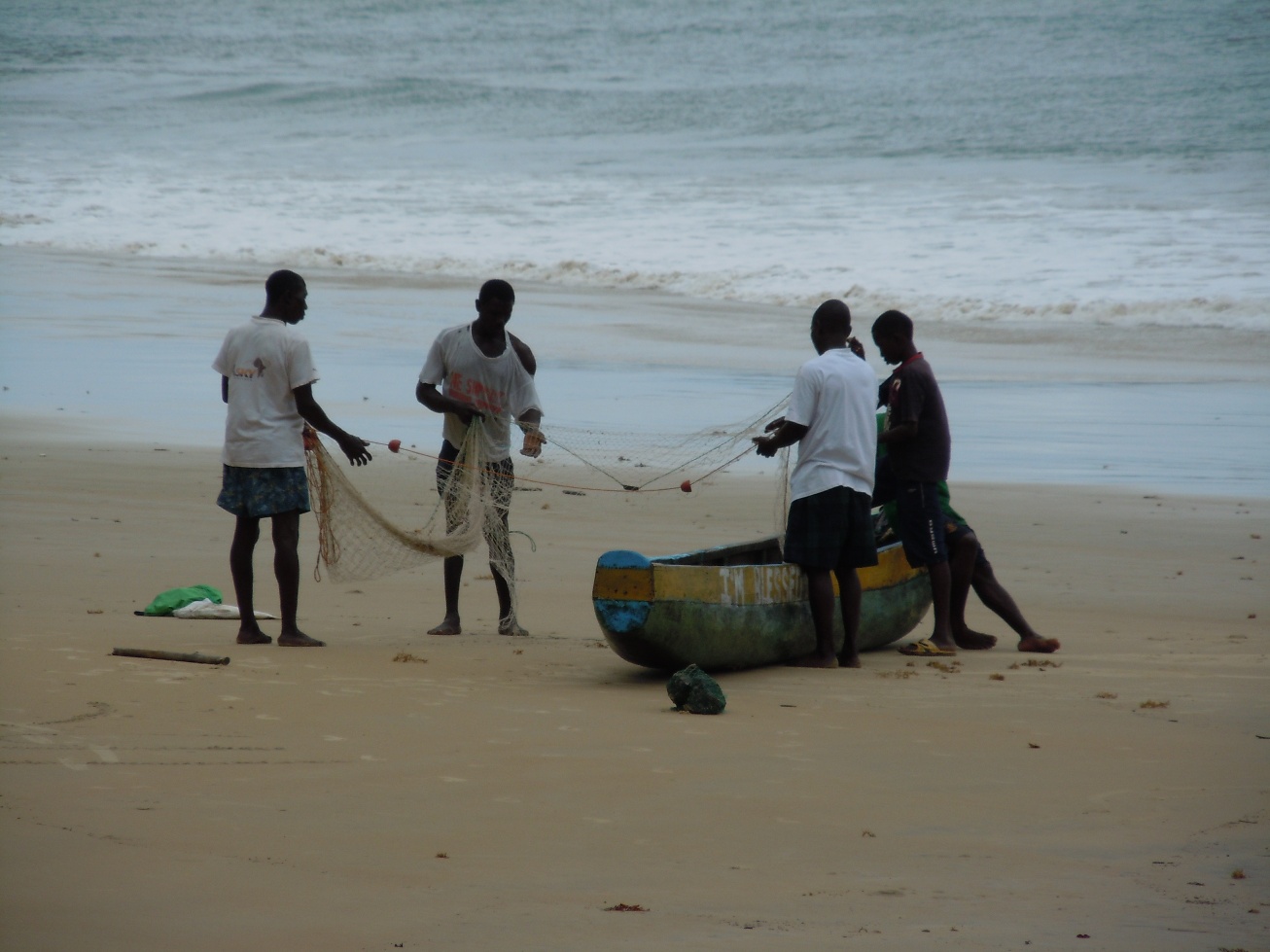
These are probably the guys that caught our fish that morning.

Saturday, September 03, 2011

Mighty Ships Showing in the USA-4th September

AT LAST - To all our USA friends. The Mighty Ships episode featuring the Africa Mercy & Tim will be shown this Sunday night (4th September) on the Smithsonian Channel at 9pm (EST) or click the link to find out times (also shown on Monday morning) - http://www.smithsonianchannel.com/site/sn/show.do?episode=137194
Sorry you've had such a long wait to see this - hope you enjoy it!

Friday, September 02, 2011

Exploring Freetown

Well we've been back just a few weeks and are finally caught up with things that are going on. We thought we'd show you a little of Freetown life. A couple of weekends ago we visited the local bakery in town then Sharon and her friend went off "exploring". They love to just mingle with the people of Sierra Leone, talk with them, find out about their lives and this day they ventured into some of the back streets and met some more interesting sights and people.
This is a church that was destroyed in the civil war. As we looked at all the overgrowth inside, wishing we could just step in, we were fearful of it collapsing and maybe rats biting us, locals started asking us if we were going to rebuild it. They seemed quite disappointed when we said no. It seems that they still hope that one day this church will be used again. Meanwhile life just carries on around it.
From the fabric alley (those in the UK will now be familiar with our fabric alley after the slideshow) we took this narrow passage off to the side and entered life in the back streets. It was a world of food, chicken, fish, chillies, people grinding cassava and a view of Freetown that we had never seen. We found this chicken market and we walked through and saw the fishing villages filled with tin and wooden shacks. Locals gathered around us to talk to us offering us a live chicken to take home. Unfortunately we had to decline, it would make too much mess in the cabin.
Further down there were these big steps leading down to a small river, where there were loads of pigs. We asked why were the pigs here, and the reply was, they live here.
This man was sitting on the side of the street carving wooden spoons.
So if you're ever wondering if you can live in Sierra Leone and have all your needs, just look at a few of the things you can buy.
Chicken feet - great for soup
No need to go to the neighbour for a cup of rice, just take your cup to the market.
Always nice to have some cooked fish with your rice, straight off the shelf in an open air market. It's probably good too. (don't worry the womans feet aren't for sale, she was just having a sleep whilst waiting for the next customer)
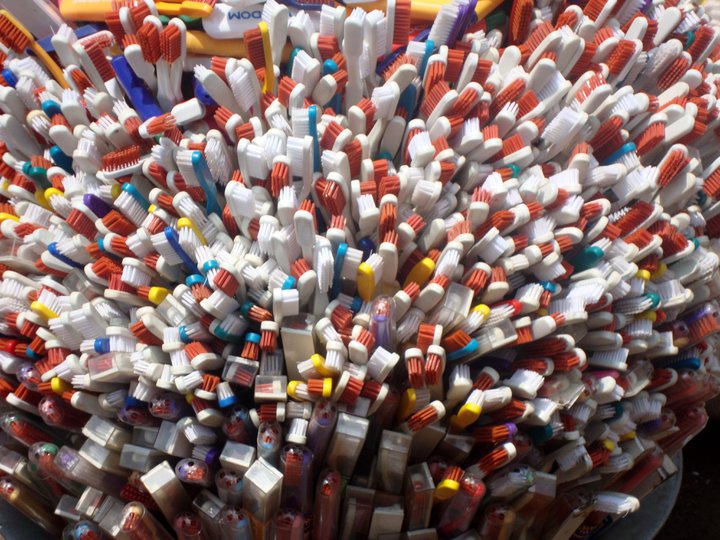
and finally after a good meal, pick up a toothbrush to clean your teeth.
Another day in Sierra Leone.

Tuesday, August 23, 2011

Barbara Receives life

Babies born with deformities in West Africa start life as victims of the West African superstition that abnormalities are signs of a curse. When Barbara was born with a cleft lip that extended up into her nasal cavity, her father pronounced that she was a “demon child.” He ordered his wife to take the tiny infant into the bush and leave her for dead. Barbara’s brave mother, Aminata, refused to abandon her child. As a result, she was thrown out of her house and moved in with her sister. Without a way to support her family, Aminata was forced to separate her four other children and send them to the homes of other relatives. By the time she was eight months old, Barbara’s weight was drastically low because her cleft lip prevented her from getting the nutrition she so desperately needed. In fact she weighed less than 4 kilograms (8.4 pounds), less than half of what a thriving baby her age should weigh. To make matters worse, she had contracted tuberculosis and was placed on a TB program at a local hospital. Of course, the lack of financial support since the abandonment by the baby’s father was another serious obstacle. Broken and devastated, Aminata had reached her darkest, lowest point. Then God stepped in and brought a ray of light. One day Aminata met a woman who said that Barbara was not a “demon child.” She also said that Mercy Ships would arrive in Sierra Leone in just a few weeks. Volunteer surgeons onboard the Africa Mercy could fix the baby’s lip – for free! Desperately clinging to this fragment of hope, Aminata took Barbara to a Mercy Ships medical screening.
Aminata was delighted when Barbara was accepted for cleft surgery onboard the Africa Mercy. However, because the baby was below the acceptable weight for surgery, she was placed on the Infant Feeding Program.
This program provided proper nutrition for the infant and instructed Aminata in a better feeding method. Barbara’s weight gain was monitored each week. The baby girl gained weight the first week she was on the program, but lost weight during the second week. She developed a fever, and she struggled to breathe or keep her formula down. The nurses gave her nasal drops to open her nasal passages, allowing her to breathe more easily. The third week she regained some, but not all, of the lost weight. It was beginning to look like Barbara was not going to be able to have her surgery. The doctors suspected she might have a cardiac problem, too, which would interfere with plans for cleft surgery. Those working with the program began praying regularly for Barbara, and slowly she began to gain the required weight. At the end of three months, despite all her problems, Barbara was cleared for surgery.

The volunteer surgeons repaired the baby’s cleft lip and palate, as well as the centerline of her nose. Because of her delicate condition, they returned her to intensive care where nurses guarded her recovery. Clinical Dietitian Jessica King, who supervised Barbara’s case for the Infant Feeding Program, said, “Barbara is a miracle baby. She had a rough time in the ICU, but she made it. She’ll bring her mom a lot of joy.”

Aminata’s love and sacrificial care for Barbara has been rewarded. Her tiny daughter may be fragile, but she has a strong will to survive. She will bless her family with a future of beautiful smiles. “I’m feeling fine now,” said Aminata, as a tear of joy ran down her cheek. “I’m thanking God for what He has done for me.”

Written by our Marketing Department
Story by Elaine B. Winn / Edited by Nancy Predaina / Photos by Tom Bradley, David Peterson and Liz Cantu

Sunday, August 14, 2011

School End of Year Celebration

This last week saw Nathanael starting school again with him now being in pre-school 2 which means an earlier start. He is now having to get used to getting up early to start school at 8:00, early mornings are NOT to his liking.
Below, are some pictures of the end of school celebration when they officially graduated to their next class. Each child is presented with a certificate which includes a character trait and bible verse.
(Nathanael's class waiting in line for their certificates)
(Nathanael receiving his certificate)
(Nathanael "allegedly" reading his certificate)
Nathanael's character trait was:
Cheerfulness
Nathanael's smile and cheerful spirit are a pleasure to be around. He brings joy to others with his quiet and listening spirit.
"a cheerful heart brings a smile to your face" proverbs 15:13a (the message)
You can keep up with Nathanael's pre-school life by checking out their blog at: http://www.afmpreschool.blogspot.com/

Tuesday, August 02, 2011

A Pretty "Tire"ing Job

“NECESSITY IS THE MOTHER OF INVENTION,” so the old adage goes. Nowhere is it more apparent than in the physiotherapy department onboard the Africa Mercy. When patients’ legs are put in casts, they can’t wear shoes – but they can’t go barefoot, either. The Rehabilitation Team has found a suitable, inexpensive, and easily available way to give each patient the foot protection needed during their recovery. The answer is . . . tire shoes.

Anama Latta, a day-worker in physiotherapy, is responsible for producing shoes from tires in various sizes to accommodate patients. He gathers old tires from motorbikes and begins by removing the wire inside with a knife. Then he measures for sizes – 10” for large, 6” for medium, and 4” for small. Using a box cutter, he cuts incisions to mark where he will use the scissors to cut through. Next, he cuts three holes on each side. Then proper lengths of polypropalene ribbon are used to tie the shoes on.
Anama says the tire shoes are stronger than other footgear they might use, and they provide more protection on the sides of the foot. “When I was a child in Togo, I used to wear shoes like these to go to my Daddy’s farm,” said Anama. “They protect better than flip-flops, and the cast doesn’t get wet.”
Tire shoes last longer than ordinary shoes, and patients can walk easily in them. Anama says he enjoys making the tire shoes. “This is the way I can help them (the patients and the Rehabilitation Team), and I’m happy to make them.”